Last verified 27 October 2026 against OpenAI, Anthropic, Perplexity and Google documentation
Do ChatGPT, Perplexity and Google pick sources the same way?
No. Google AI Overviews draw on the Googlebot index and require a page to be indexed and snippet-eligible. ChatGPT runs a separate index built by OAI-SearchBot. Perplexity runs its own crawler and says its user-triggered fetcher ignores robots.txt. One site can be visible to one and absent from another.
Teams treat AI visibility as one problem with one fix. It is three problems running on three separate indexes, with three different gates in front of them. A page can be the top citation in Perplexity and invisible in ChatGPT, and the cause is usually something you can find in an afternoon.
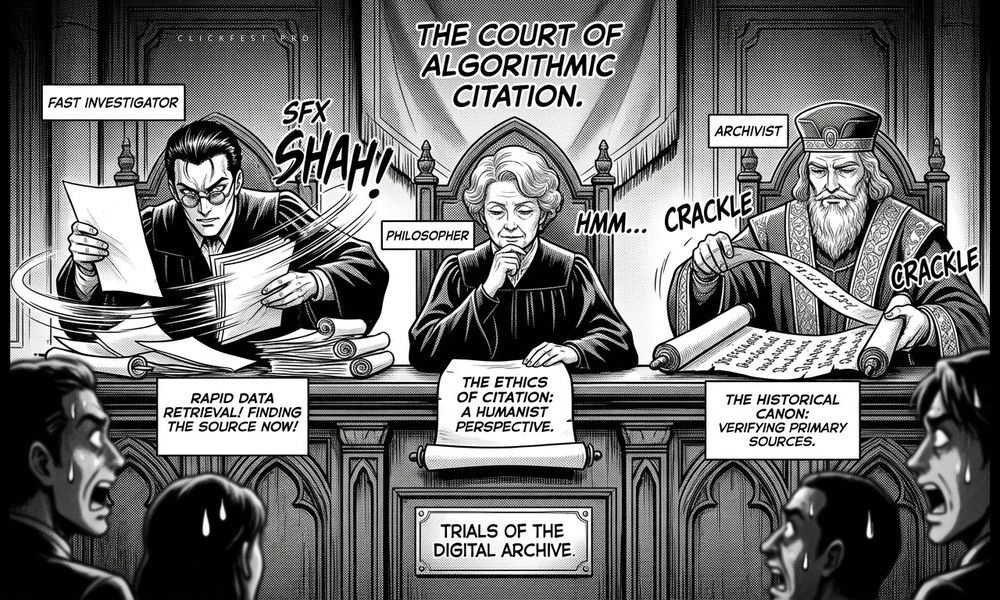
The three run on three separate indexes
Start here, because this single fact explains most of the confusion. Each operator runs its own crawler fleet and its own index. Your robots.txt treats them as different entities, and so should you.
The practical consequence: a rule in your robots.txt reaches exactly one of these columns at a time. Google’s own specification states that a crawler obeys the group with the most specific matching user agent, and that named groups and the global * group are not combined. Allow one and you have allowed one.
Google AI Overviews: snippet eligibility is the gate
Google’s AI features are the least separate of the three. Its own guidance states that the best practices for SEO continue to be relevant, because the AI features run on the core Search ranking and quality systems. There is no separate crawler to allow and no special markup to add.
There is one gate worth knowing precisely. Google requires a page to be indexed and eligible to be shown in Search with a snippet before it can appear in AI Overviews or AI Mode. So nosnippet or max-snippet:0 removes you from both, and takes your ordinary search snippet with it.
The Google-Extended trap
Google-Extendedlooks like the AI opt-out and is not. Google says it covers Gemini training and grounding, and that it “does not impact a site’s inclusion in Google Search nor is it used as a ranking signal.” Blocking it leaves you fully present in AI Overviews. People block it, see no change, and conclude the controls do not work.
ChatGPT: a separate crawler, and a separate decision
OpenAI splits the job across three tokens, and conflating them is the most expensive mistake in this area. GPTBot collects training data. OAI-SearchBot builds the index that surfaces websites in ChatGPT’s search features. ChatGPT-User fetches a page when a live question needs it, and OpenAI notes that because those actions are user-initiated, robots.txt rules may not apply.
The split means the training opt-out and the citation decision are independent. You can refuse to be trained on and still be cited daily. Most sites that block “OpenAI” block the wrong one and lose the citations while staying in the training set they objected to.
~24 hours
How long OpenAI says its search systems take to reflect a robots.txt change. Perplexity states the same. Re-crawling your pages after that takes longer, so do not judge an edit the same afternoon.
Visible on one engine and missing from another?
That pattern has a short list of causes and they are all findable. We check each engine’s crawler, each gate, and your edge rules, then tell you which engine is blocked and why.
Perplexity: cites by design, and one fetcher ignores your rules
Perplexity is the most citation-forward of the three: it attaches sources to answers as a product decision rather than an occasional courtesy. Its documentation describes PerplexityBot as designed to surface and link websites in search results, and says it is not used to collect content for training foundation models.
The notable part is the second token. Perplexity states plainly that because a user requested the fetch, Perplexity-User “generally ignores robots.txt rules.” That is worth reading twice if you assumed robots.txt was an access control. It is a request that compliant crawlers honour, and user-triggered fetchers across all three operators largely do not.
What actually differs, and what does not
Access differs completely: three crawlers, three gates, three sets of rules. Everything downstream of access is close to identical. All three retrieve a handful of pages and compress them, and all three reward the same qualities in a page.
The controlled evidence on that second half comes from the GEO study at KDD 2024, which found the strongest visibility gains came from adding credible quotations, adding statistics and citing sources, while keyword stuffing performed 10 percent worse than leaving the page alone. That finding is about generative engines generally, not one product.
So the work splits cleanly. Access is per-engine, mechanical, and done once. Content is shared, slower, and compounds across all of them. Audit access first because it is cheap and binary, then write for all three at once.
Questions about how AI engines choose citations
If I fix my robots.txt, will all three start citing me?
It removes the block, which is necessary and not sufficient. After access, you are competing on whether your page has something quotable against every other page in the retrieval set.
Why do I appear in Perplexity but not ChatGPT?
Most often a robots.txt group difference, since the two read entirely separate tokens. Check whether OAI-SearchBot falls under a group that disallows it, including a * group it inherits by default.
Does blocking Google-Extended remove me from AI Overviews?
No. Google states it covers Gemini training and grounding and does not affect inclusion in Search. AI Overviews run off the Googlebot index, so only a Googlebot block or a snippet directive affects them.
Can I block AI answers but keep my search rankings on Google?
Not cleanly. The only lever is snippet control, and the same directives that suppress an AI Overview suppress your normal result snippet, which usually costs more clicks than the AI Overview did.
Do any of these engines respect robots.txt for live user questions?
Largely no. OpenAI notes rules may not apply to user-initiated fetches, and Perplexity states its user fetcher generally ignores robots.txt. Treat robots.txt as a request to crawlers, not as access control.
Which engine should I prioritise?
The one your buyers use, which you find by sampling rather than by assuming. Failing that, fix access on all three, since it is an afternoon’s work, and let content serve them together.
Three engines, three indexes, three gates. Most sites are blocked on exactly one.
We check each engine’s crawler against your rules, your edge configuration and your snippet directives, then sample real buying questions to see which gate is costing you answers.
- ✓Per-engine access status, traced through robots.txt, CDN and origin rules
- ✓A sampled citation share for each engine, with the questions and dates
- ✓A fix list that separates the per-engine access work from the shared content work
The access half of this is something you can do yourself: post one is the five-minute version.
About the author. The ClickFest team runs SEO, AEO and GEO programmes for businesses that want to be found by search engines and answer engines. We are an independent agency with no affiliation to OpenAI, Anthropic, Perplexity or Google. Every claim above comes from the operator’s own documentation, which changes without notice, so check it before you edit a live file.
Pingback: Content Effort: Make Your Articles Useful | ClickFest
Pingback: Better Product Listicles: An Editorial Checklist | ClickFest
Pingback: SEO Communities: Turn Advice Into Verified Work | ClickFest
Pingback: Infographic SEO: Create Visuals Worth Citing | ClickFest
Pingback: RankDots Brand Voice: A Practical Evaluation | ClickFest
Pingback: Yelp and ChatGPT: Local SEO Listing Checklist | ClickFest